

Even under the best of circumstances, returning to the U.S. from traveling abroad and going through immigration and customs procedures can be stressful and time-consuming. Therefore, many travelers prefer to use Mobile Passport or Global Pass to speed up the process. However, recent data obtained by Bloomberg through a public records request shows that the rate of travelers losing Global Entry eligibility has been rising since early 2024.
Global Entry is a trusted traveler program that requires applicants to be interviewed by a U.S. Customs and Border Protection agent and undergo background checks on criminal, law enforcement, customs, immigration, agricultural and terrorist records. According to the CBP website, “Any violation of the terms and conditions of the program will result in appropriate enforcement action and termination of a traveler’s membership privileges.”
Bloomberg reports that the Trusted Traveler program is revoked due to criminal charges, agricultural violations or attempts to carry a firearm through a TSA checkpoint. Even so, the recent increase in global entry revocations is another sign of increased border scrutiny. Combined with an increase in travelers being stopped by border agents for additional questioning or searches, it’s understandable that many travelers are wondering about their rights and what to expect when re-entering the United States
It is worth noting that the vast majority of U.S. citizens returning to the country pass through customs without any issues or incidents. However, getting blocked can happen to anyone. So as the Trump administration continues to target U.S. entry points with increased searches, detentions, and deportations, it’s important to understand your rights as a U.S. citizen and how to protect yourself.
Can U.S. citizens be stopped at the border?
U.S. Customs and Border Protection officers can stop anyone at the border, including U.S. citizens, to determine whether someone can enter the country legally. Officers may also search items for illegal substances (such as narcotics or other contraband). This may involve being pulled aside to answer additional questions or subject to a bag search, device search, or in extreme cases even further body searches.
U.S. Customs and Border Protection claims travelers do not have the right to an attorney during inspection.
Although U.S. citizens are subject to inspection by U.S. Customs and Border Protection, they cannot be denied entry. According to the ACLU, “If you are a U.S. citizen, you are only required to answer questions that determine your identity and citizenship, although refusal to answer routine questions about the nature and purpose of your trip may result in delays and/or further inspection.”
Before you leave the airport, keep your passport safe in case you are stopped and asked to answer additional questions about your identity and citizenship. If you are particularly concerned about being stopped or possibly detained, it is a good idea to write down your attorney’s name and phone number in case you have to call in an emergency.
Can CBP agents search your phone or other devices?
The U.S. government stipulates that searches of cell phones, laptops, or other electronic devices fall under the same authority as searches for general contraband. Some groups, such as the ACLU, have said device searches are a “controversial legal issue” and various court cases in different states have set limits on device searches at the border. However, because the Supreme Court or Congress have not yet established national standards, CBP currently believes that device searches are permitted to protect national security and prevent contraband from entering the country.

Reward your inbox with the TPG daily newsletter
Join over 700,000 readers and get breaking news, in-depth guides and exclusive offers from TPG experts
According to the American Civil Liberties Union, U.S. citizens are not required to unlock their devices or provide any passwords for officials. However, if you don’t comply, border enforcement agents can confiscate the devices for further inspection, and you may be subject to additional questioning and delays in clearing customs. If your equipment is impounded for any reason, make sure you get a property receipt.
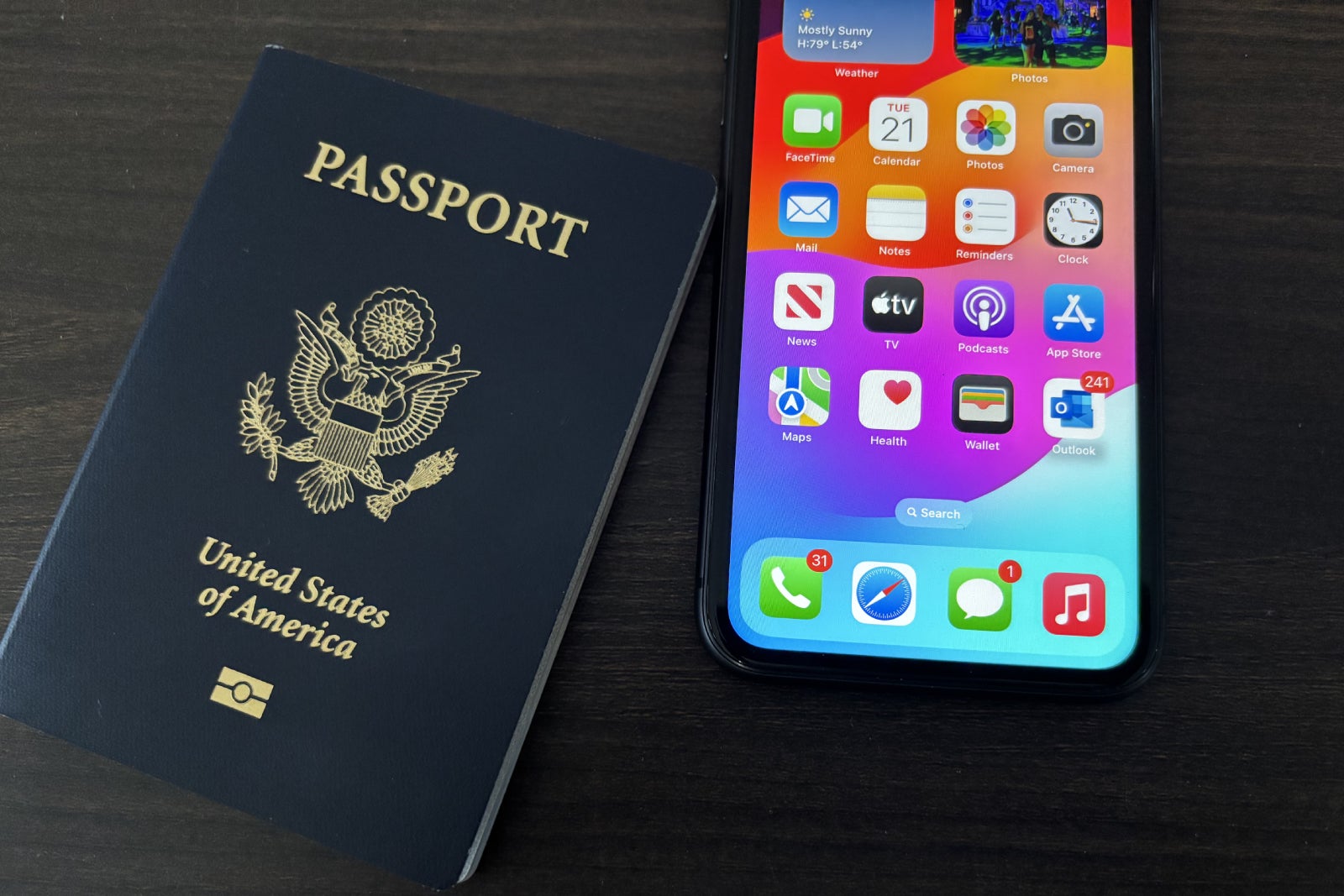
According to the U.S. Customs and Border Protection website, officers can conduct basic equipment checks (which are performed manually by border agents) or use special equipment to conduct more advanced searches. Advanced searches require reasonable suspicion of a crime or national security concern, and a senior CBP manager must approve the procedure. CBP claims that in 2024, “less than 0.01 percent of arriving international travelers encountered by CBP at ports of entry had their electronic devices searched.”
While the increased coverage of device searches (and the decisions made by border agents following searches) certainly highlights growing concerns about the Trump administration’s balance between border security and individual liberties, Esha Bhandari, deputy director of the ACLU’s Speech, Privacy, and Technology Project, noted on the ACLU Freedom Podcast that device searches are not unique to this administration.
“These device searches are happening across government, and the number of searches across government has been rising,” Bhandari said. “But I think we’re seeing new concerns now that governments may be using these disallowances, these disallowances, to exclude people simply because they don’t like the way they think or express themselves.”
Should you worry about digital privacy when traveling?
The most widely reported stories about device searches involve non-U.S. citizens. So some fellow citizen travelers might be wondering: If this doesn’t currently affect most U.S. citizens, should I care about digital privacy when traveling?
Your device is essentially a digital lockbox that holds everything you’ve ever said or done. They can provide highly personal information that you might want to keep private—whether it’s demographic information, your religious and political beliefs, health information, work conversations, or even just your hot take on the latest season of The Last of Us.
“It’s one thing to say, you know, ‘We got a search warrant and we’re looking for a very specific limited item for what we’re investigating,'” Bhandari said. “But if you’re just digging through it, think about how much can be misinterpreted. Think about how much can be taken out of context.”
It is not unreasonable to want to keep digital data as private as possible, and U.S. citizens have the right to receive this privacy from the government in the form of protection against unreasonable searches and seizures. While the U.S. government may consider device searches at the border (with or without a warrant) to be reasonable searches, it is fair to worry that any entity, including the government, has full access to private data that could be used to attack you or someone associated with you.
How to protect your privacy when returning home
If you’re concerned about protecting your data and privacy in this era of heightened border scrutiny and political uncertainty, here are some simple steps you can take while traveling.
Travel with as little equipment as possible
One simple way to protect the privacy of your devices while traveling is to leave them at home.
“If you don’t have your information when you’re crossing the border, they can’t search it,” Daniel Kahn Gillmor, a senior technical expert at the ACLU, said on the same “At Liberty” podcast.
Leaving it all behind may not be feasible, especially in an increasingly digital world where many of us use smartphones to communicate, navigate, take photos, and pay. But take inventory of what you’re carrying with you. If you’re going on vacation, you may want to leave your work laptop at home. Instead of bringing an iPad for entertainment, bring an extra book or a less personal device (such as a Kindle or a gaming device in airplane mode).
Use encryption and remove biometric access to devices before traveling
Your smartphone probably has basic encryption via Android or iOS, but make sure all your devices have encrypted storage (this will also protect you from other network issues while traveling, so it’s a win-win). Gilmore warns that the strength of your device’s encryption depends on your password.

U.S. citizens don’t need to hand over their passcode to unlock their devices, but you may be forced to use biometric information. Turn off Face ID, remove fingerprint access, and lock your device with a strong, unique passcode. If your phone password is 000001 or your spouse’s birthday, it might be time to change it.
Please keep your device in airplane mode when entering this country
Border agents should not search cloud-stored data; searches are only intended to access content downloaded to your device’s hard drive. Before you leave the airport, keeping your devices in airplane mode, disabling Wi-Fi and Bluetooth, and disconnecting from the cloud can add an extra layer of privacy if you’re pulled over for a search.
If you submit to a search of your device, the CBP website states that officers should ask you to turn off these features before searching. However, if you have privacy concerns, it’s best to avoid taking chances and disable these features before entering the immigration and customs halls.
Delete sensitive data from your devices before traveling
If you are concerned about specific information on your device (such as photos, sensitive work information, or private conversations), you may consider downloading that information to an encrypted external hard drive that you leave at home while traveling and then deleting it from the device. Be sure to delete these items completely, as some devices have a temporary trash bin where items remain for a certain time frame. Even so, unless you reformat your device, a forensic search may still find these deleted items.
You can also take additional steps, such as logging out of your iCloud, Google, or Outlook account, to temporarily limit what personal information is easily accessible through your device.
For a more comprehensive guide to protecting digital privacy, check out the Electronic Frontier Foundation—a nonprofit dedicated to defending civil liberties in the digital world.
bottom line
While hundreds of thousands of people enter the United States without incident every day, you never know when you might be pulled aside for additional questioning or a search. Reports of border agents intercepting U.S. citizens, particularly immigrants and members of minority groups, have increased since the Trump administration took office.
Have a plan for what you might do if someone asks you to ask additional questions or conduct a search of your device. Do you consent to the device searching and handing over your password? Or will you refuse and accept the possibility that your device will be confiscated and returned to you later? Do you have a phone number for an attorney who you can contact if you are detained for any reason? If you’re concerned about your digital privacy when passing through U.S. ports of entry, the steps above can help protect you and your private data.


