

I’m excited to announce a new course launching next week: Daily Energy. This is a three-month program designed to help you establish new practices in your life that will help you feel more energized and accomplish meaningful work. This course builds on topics I’ve written about over the past few months. It’s not just about diving into the research, it’s about turning those insights into actionable changes that sustainably increase your energy levels.
Registration will open on Monday, March 23rd. In the meantime, I’m sharing a short essay series discussing energy issues, as well as a sample of everyday energy lessons (Fuel, Flow, and Prosperity).
human energy crisis
We are experiencing a human energy crisis. One-third reported feeling tired. One in eight people report feeling tired most of the time or every day. In our jobs, 76% of us experience burnout at least sometimes, with nearly a third of us experiencing burnout “often” or “always.”
In some ways, our exhaustion is paradoxical. As a society, we are richer than ever. The amount of labor required to obtain enough food to survive was far less than at any time in history. We are full of entertainment and new leisure activities. And, for most of us, the physical effort required to get work done is at an all-time low.
Describe our lives to almost anyone throughout history and they will imagine a life of ease and convenience: machines for washing clothes and dishes, water running from pipes in our homes rather than from rivers or wells, desk jobs, and ready-made food delivered to our doorsteps.
Yet evidence suggests that all these modern luxuries don’t fill us with extra energy. Researcher Robert Hockey, author of “The Psychology of Fatigue,” even believes that the concept of fatigue itself, the unpleasant experience of feeling exhausted, is a modern invention. Of course, people in past societies felt tired after work, but they didn’t have the burnout and exhaustion issues we have in our modern times.
Instead, we have widespread trends in fatigue and burnout, rising rates of energy-related mental health problems such as depression and ADHD, and increased consumption of coffee and energy drinks – all of which suggest something is seriously wrong with the way we manage energy.
Why do we burn out?
There are three fundamental causes of this energy crisis:
First, our modern lifestyles place a heavy burden on our biology. Indoor lighting and always-on entertainment can disrupt our sleep. Sedentary habits can harm our health and fitness. A poor diet makes us overeat and undernourished at the same time. Chronic psychological stress can drain our bodies and minds.
Second, our work culture is unnatural and unhealthy. For most of human history, work was governed by natural rhythms of effort and recovery. Hunter-gatherers had to work hard to survive, but they also got plenty of rest throughout the day. Before power came on, work ended when the sun went down. Even medieval farmers probably had more days off than we do.
Third, social trends strip our work of much of its meaning.. Pre-modern people rarely had “dream” jobs, but they also didn’t have “bullshit” jobs. Work, even hard labor, is consistent with an understanding of the world, which means it satisfies psychological needs. Without this understanding, we oscillate between an unhealthy obsession with work and the illusion of escaping the perfect dream job or early retirement.
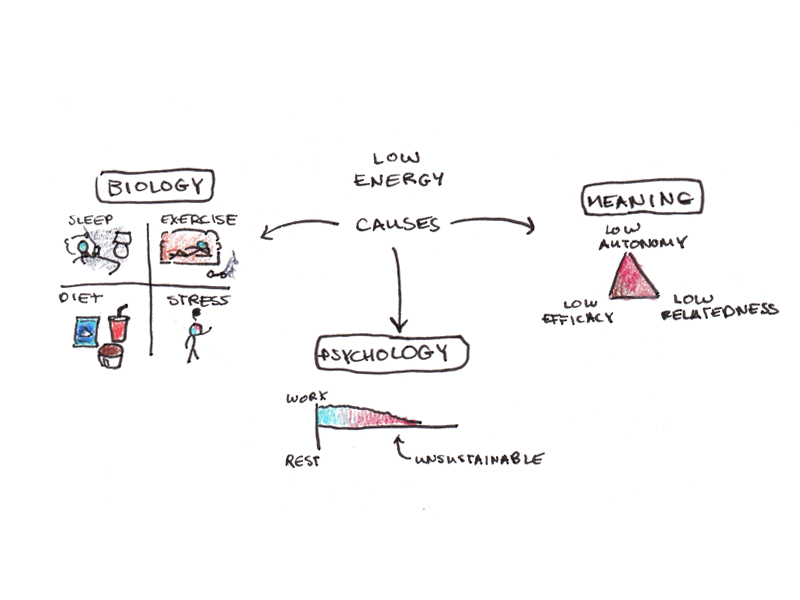
These three forces mean that despite the material abundance and apparent comfort of our lives, many of us feel tired and apathetic.
Energy management is key to productivity and well-being
The forces that burn us out are much bigger than ourselves. Longing for simpler times is a pipe dream, not a solution.
Even so, there are practices we can cultivate that return to our old, more humane ways of managing energy.
In the face of a world designed to deplete our bioenergy, we can create new fuels. We can develop intentional sleep, exercise, spending, and stress management habits to restore our ability to live with energy and vitality.
Faced with the constant pressure to work more, longer, and harder, we can design a new process. We can create a rhythm of work and recovery that allows us to avoid burnout while actually getting more done.
In the face of unsatisfying work that is divorced from meaning, we can create work that allows us to thrive. Neither a burden nor an obsession, we can choose work that is more meaningful, or we can develop an attitude that enriches the work we have chosen.
These are not easy goals to achieve, and overall cultural trends certainly don’t help. But these goals are achievable if we take them seriously.
Next week I will start working on my new project “Everyday Energy” with a group of students. If you really want to improve the quality of energy in your life, whether for work or happiness, I hope you’ll consider joining us.


