Strategic Use of Microlearning: Designing Role-Based Learning Paths for Lasting Impact


Microlearning reshapes workplace learning. Short, focused lessons are easier to complete, easier to revisit, and easier to fit into busy schedules. But many learners have experienced the drawbacks of this: you complete a five-minute module, answer a few questions, and move on – only to later realize that very little has changed in the way you work.
The problem isn’t microlearning itself. This is its structure.
When microlearning is delivered as isolated content rather than part of a clear progression, it becomes something you consume rather than something that develops you. Its true value comes when it is intentionally designed around your role, your skills and your career development.
Why microlearning alone isn’t enough
Short videos, simulations, and quick knowledge checks are great for introducing skills. However, without direction, learning can feel disjointed.
You may want to know:
- How does this relate to my job?
- What should I improve next?
- How do I know I’m getting better?
If there is no explicit path:
- Skills are introduced but not enhanced.
- Knowledge disappears quickly.
- Growth feels unclear.
- Effort doesn’t always translate into performance.
Microlearning works best when answering specific questions:
What abilities does this role currently need to improve?
When learning aligns with real-world job expectations, it becomes purposeful rather than passive.
Design learning around role and progression
Role-based learning paths connect small learning moments into meaningful journeys.
For example, a sales executive might make progress by:
- Product basics
- Objection handling skills
- CRM system proficiency
- negotiation dialogue
- Advanced relationship building
Each micromodule builds upon the last micromodule. Rather than completing random lessons, learners develop abilities incrementally.
This approach works for every role—customer support, operations, leadership, or technical teams. Each character has basic skills, application skills, and advanced abilities. Micro-learning is constructed across stages – foundation, application, mastery and reinforcement to help learners clearly see:
- what are they building
- why this is important
- what happens next
This clarity increases motivation and ownership.
Make microlearning interactive and memorable
Engagement isn’t about the visuals, it’s about the participation.
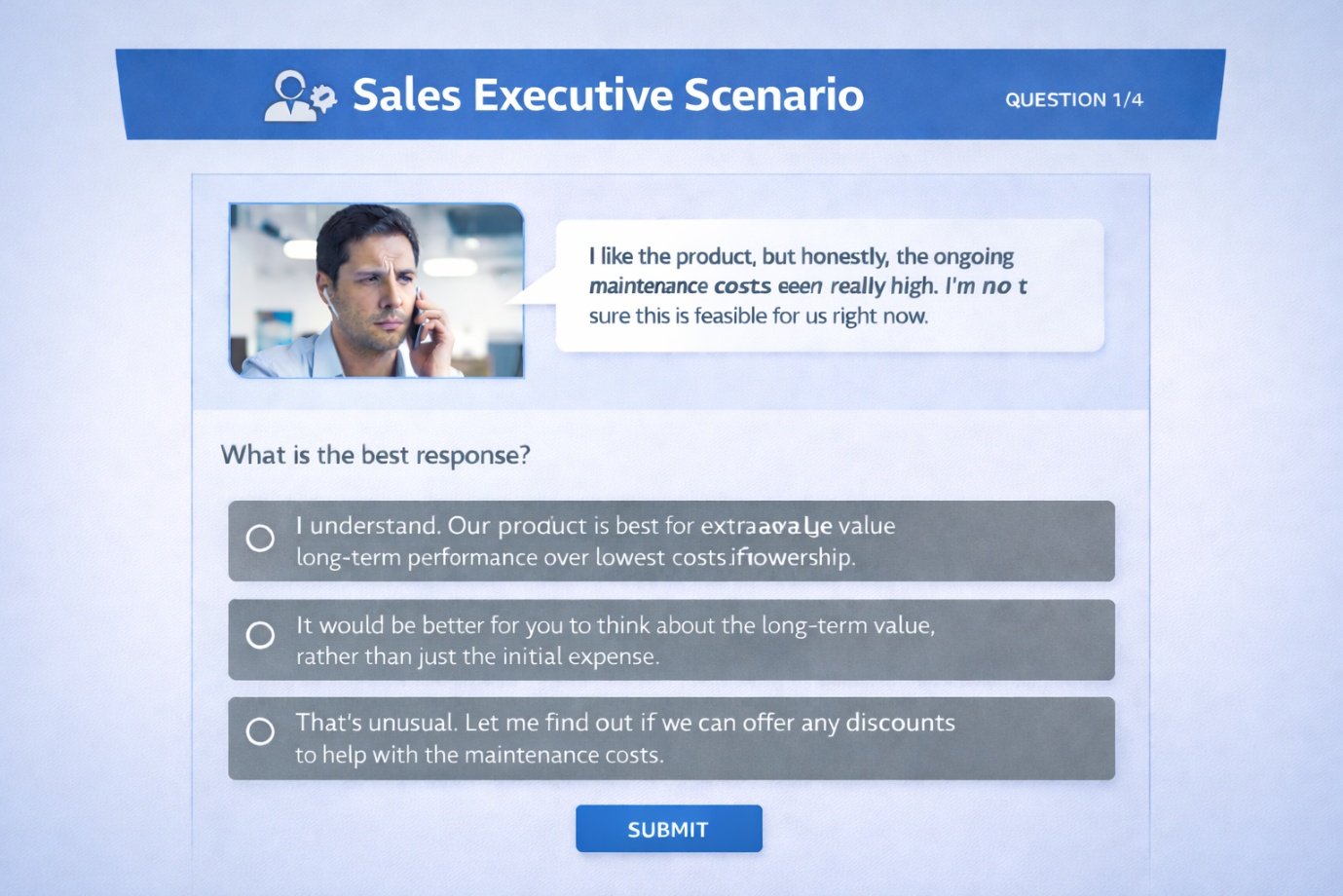
Interactive formats such as scenario-based questions, timelines, simulations, drag-and-drop exercises or progressive reveal activities encourage learners to think and decide rather than just watch.
For example:
- Scenarios can simulate real customer conversations.
- A timeline can clarify process stages.
- Drag-and-drop tasks can enhance the accuracy of the program.
- Milestone certificates can mark the completion of a skill.
When learners actively respond, reflect, and practice—even briefly—the brain processes information more deeply. Passive contact creates familiarity; interaction builds memories and confidence.
Microlearning becomes more powerful when it allows learners to apply knowledge immediately.
Key Difference: Reinforcement
Completion does not equal ability. Reinforcement turns learning into skills.
1. Practice now
After learning a concept, applying it immediately can enhance memory. A brief scenario or real-life problem forces the brain to retrieve new knowledge. Retrieval strengthens memory and begins to build confidence.
Instead of asking “Do you understand?”
Effective reinforcement asks: “Can you use this?”
2. Interval reinforcement
Memories naturally fade over time. Research shows that revisiting information at regular intervals can significantly improve long-term memory.
In practice, this might look like:
- A brief follow-up challenge three days later
- Recall the questions a week later
- New application scenarios in two weeks
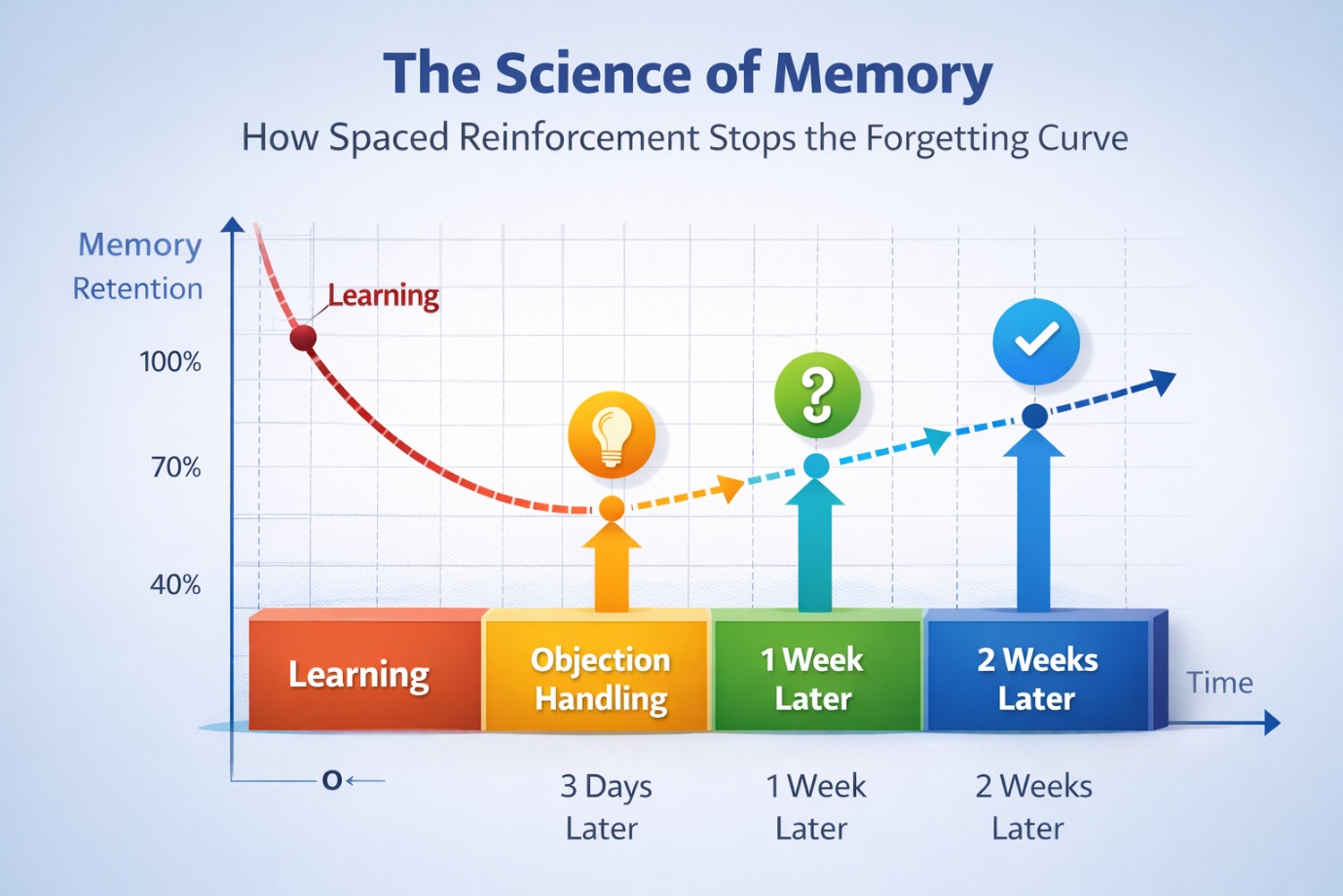
What happens with every rewatch is that the memory starts to fade. The effort of recall strengthens neural pathways, making it easier to master the skill next time. Over time, this repetition becomes habit-forming and automatic.
This is the process of micro-learning from cognition to mastery.
3. Performance-Based Progress
Progress becomes meaningful when learners can unlock advanced content only after demonstrating understanding. Progress reflects ability—not just completion.
This approach answers an important question:
“What do I need to show before I move forward?”
It transforms learning from content accumulation to skill development.
4. Recognition and growth
Recognition reinforces progress. Visible milestones or certifications can help learners see tangible evidence of development. This builds confidence and enhances professional identity.
When learners feel progress, engagement increases.
Connect learning and career development
Microlearning is strategic when it supports long-term growth.
Don’t ask “What short mod should we create?”
A better question is, “What capabilities must this character master in the next 90 days?”
Match learning to onboarding milestones, performance goals, promotion readiness, or skills gap assessments to ensure microlearning supports real progress.
When learners see a clear connection between training and career development, learning shifts from an obligation to an opportunity.
From rapid learning to lasting ability
Microlearning is powerful—but only when designed with intention.
When built around a role, reinforced over time, and aligned with a growth path, it:
- Develop measurable skills
- boost confidence
- Improve performance
- Support career development
The goal is not to shorten learning time.
The goal is to make learning purposeful.
When microlearning evolves from siled content to connected, enhanced learning journeys, it moves from rapid consumption to lasting professional growth.


