

Do Americans really prefer jets to turboprops? Boutique premium airline JSX is ready to find out.
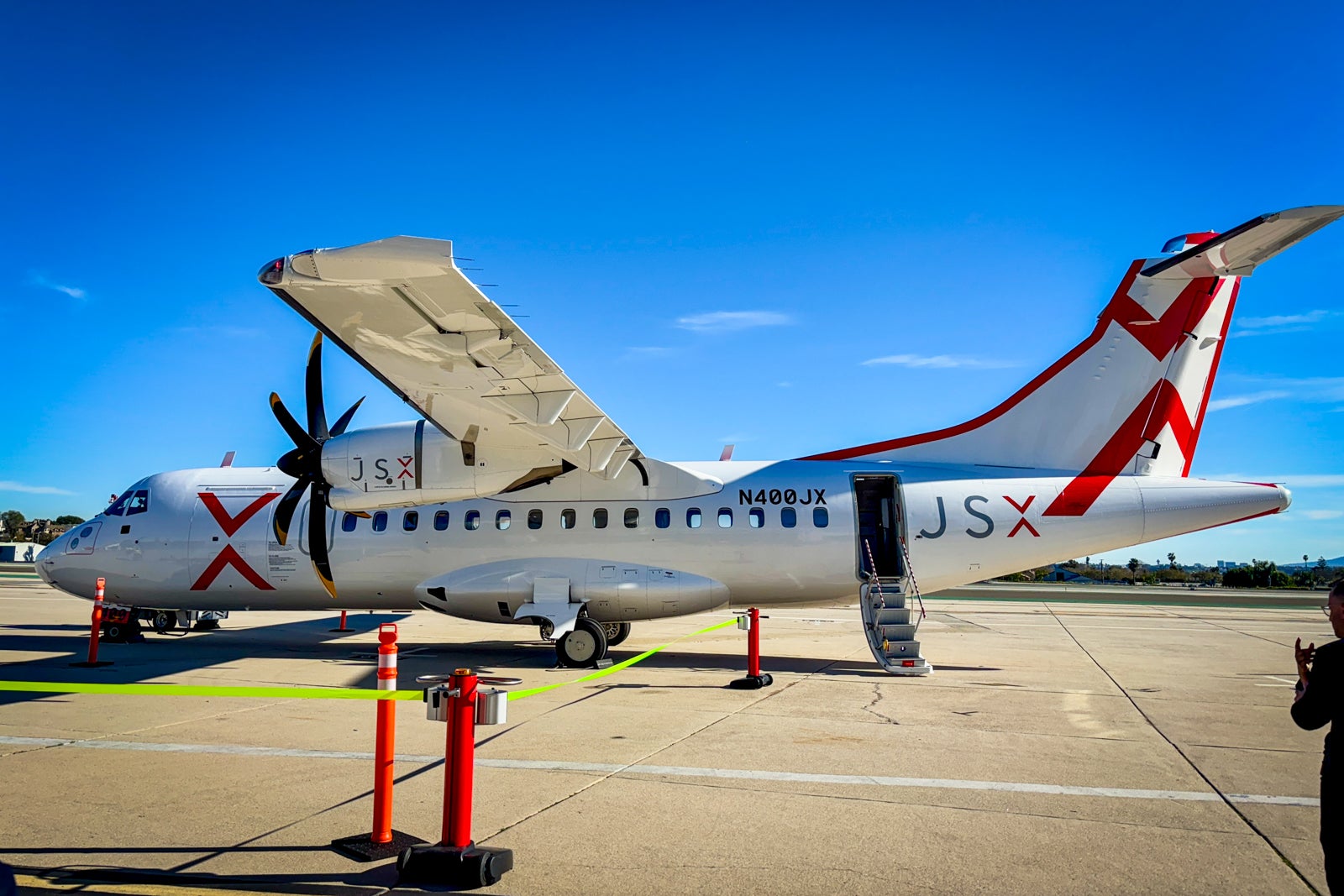
The Dallas-based public charter airline has a fleet of new ATR 42-600 turboprops, a throwback to the late 1990s when major airlines were investing heavily in the then-new regional jets, arguing they were quieter and more comfortable.
The rest is history: regional jets became fixtures on routes to small and medium-sized cities, and turboprops all but disappeared from U.S. commercial service
But now, they are making a comeback.
Last month, JSX debuted its new ATR propeller-driven aircraft on flights between Santa Monica Airport (SMO) in Southern California and Harry Reid International Airport (LAS) in Las Vegas. Next year, the airline will see whether its unique segment of high-end travelers will fly on turboprops in the name of convenience, as they do on the airline’s Embraer ERJ regional jets.
“The reason we’re experimenting is to experiment,” JSX CEO Alex Wilcox told TPG in an interview in Santa Monica on Monday. “We don’t know what we don’t know yet. All the early signs are very positive.”
RELATED: Goodbye — and wishing you the best of luck? JetBlue Airways retires its smallest, most outdated aircraft
If all goes well, JSX has the option to purchase up to 25 more ATR 42-600s under a tentative agreement announced at last year’s Paris Air Show.
If the customer refuses, the airline can return the leased aircraft to its owner.

Reward your inbox with the TPG daily newsletter
Join over 700,000 readers and get breaking news, in-depth guides and exclusive offers from TPG experts
So, what’s going on aboard JSX’s new turboprops?
The airline spoke to select media outlets on Monday’s flight off the Southern California coast to give them an early look at what travelers can expect.
RELATED: Airships: AvGeeks want to keep these aviation relics in the sky
“Shockingly quiet”
Surprisingly, the ATR isn’t that loud.
Using a noise measurement app, I compared the decibels on the ATR to those on a Boeing 757-300 that had flown earlier in the day.
The ATR was louder on takeoff than the 757, but the engines quieted down shortly after takeoff when climbing out of SMO. Once at cruising altitude, the decibel reading I captured was comparable to a 757: It was in the mid-90s, a level that the National Institutes of Health classifies as loud, but safe for a few hours of exposure.
That’s about the same range as the noise measurement app captured while riding the subway through the Washington, D.C., tunnels, but a bit larger than the readings in the 80s I captured at the cruising altitude of a Boeing 737 MAX jet. (For comparison, levels in a quiet office are in the 60s.)
More from TPG: Start traveling with points, miles and credit cards
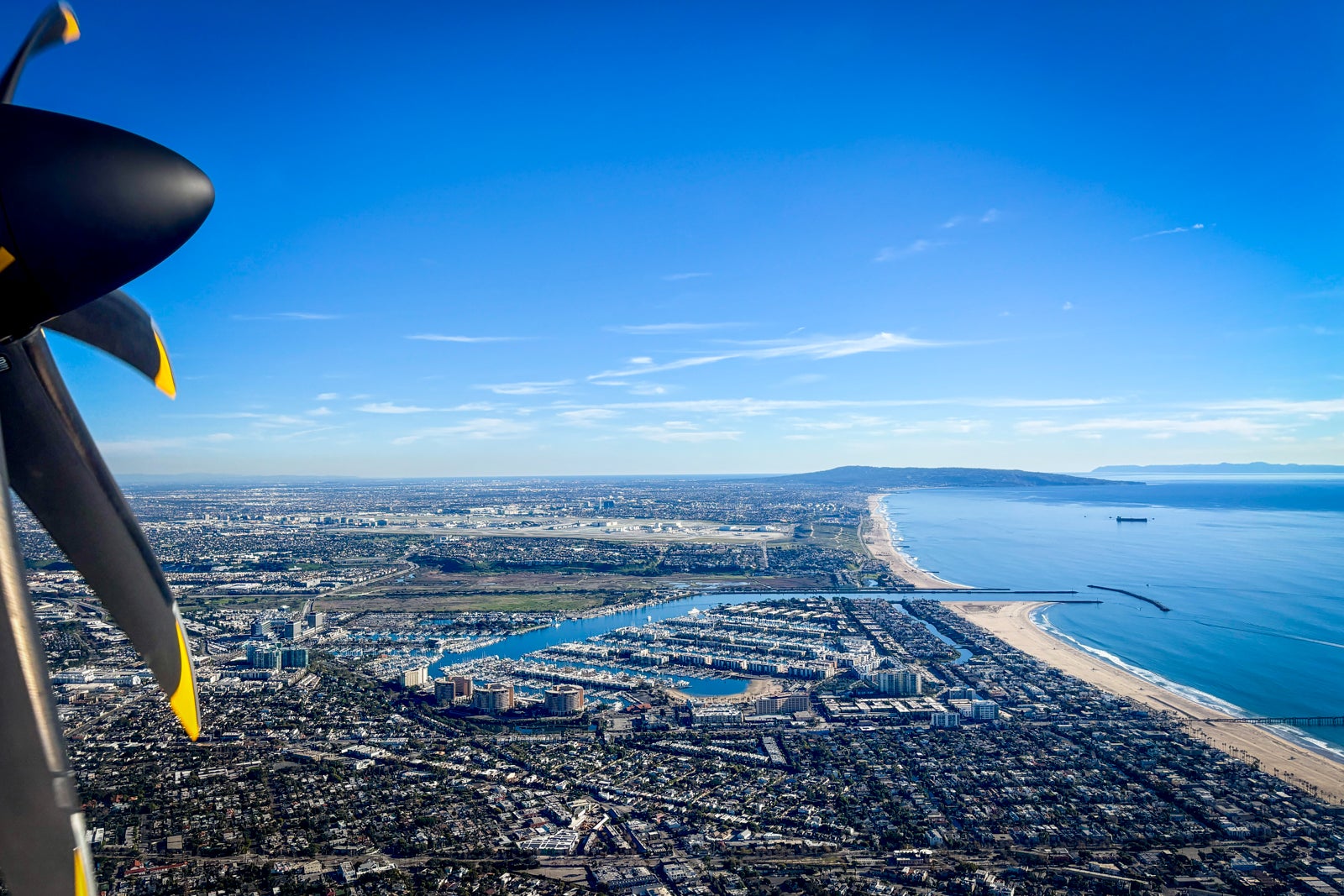
When asked about the noise on the ATR, Wilcox said: “It’s shockingly quiet in here.” He added that the second and third rows, immediately adjacent to the propellers, are the loudest and the last few rows are the quietest. I’m sitting in 1A.
The ATR 42-600 is quieter than earlier ATR models. The aircraft manufacturer achieved this by adding blades to the propellers and shortening said blades to reduce noise.
Chris Jones, ATR’s head of Americas, completely disagrees with the premise that Americans prefer jets to turboprops.
“I would challenge the conventional wisdom that people are averse to turboprops because people in their 30s and 40s now … don’t have the opportunity to fly in a turboprop just because of the timing of exiting the market,” he said in an interview Monday. “That’s conventional thinking.”
area comfort
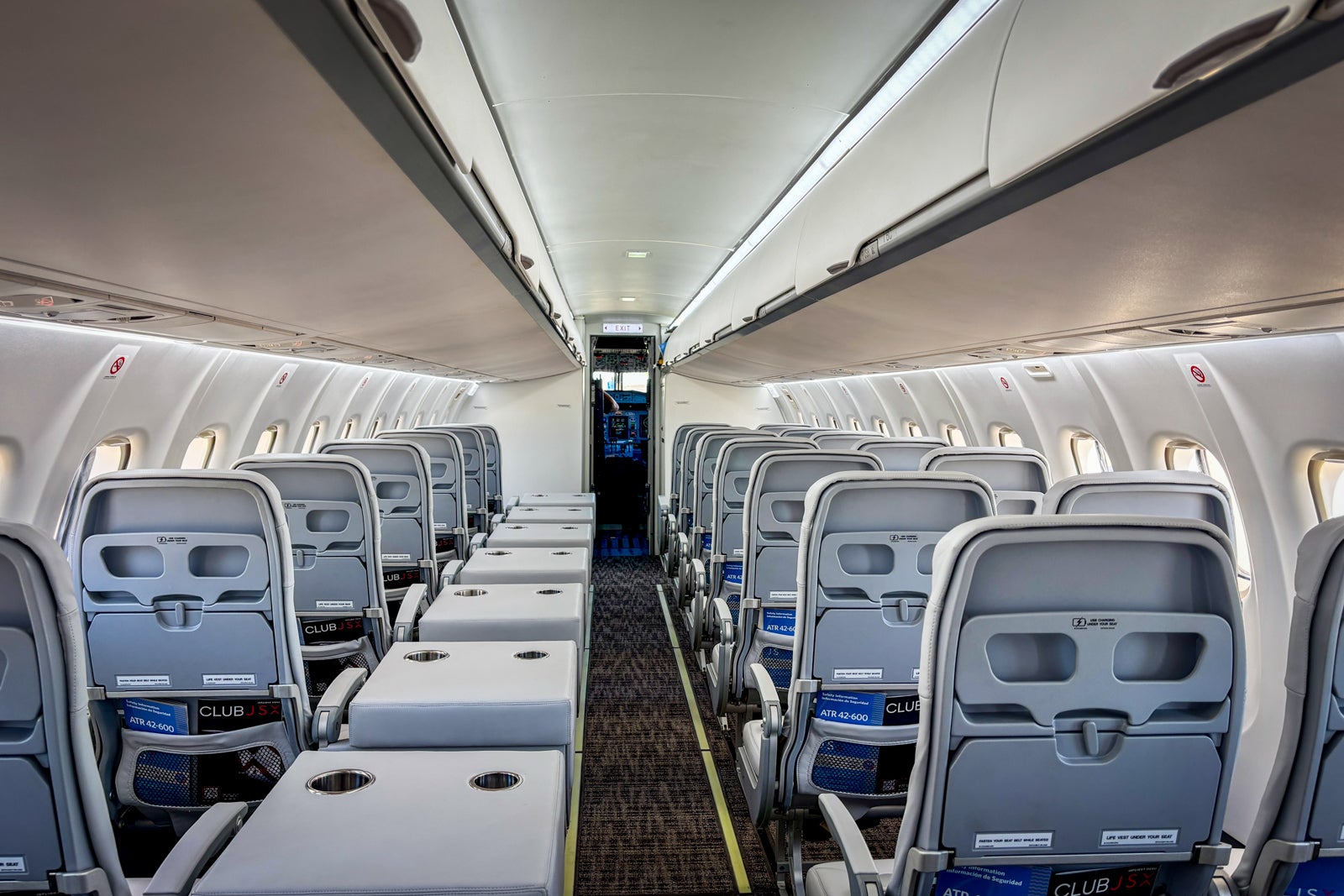
The ATR 42-600’s cabin is similar to what JSX offers on its ERJ: it has white faux leather seats arranged in a 2-1 layout, with a table in place of the seat next to the single seat.
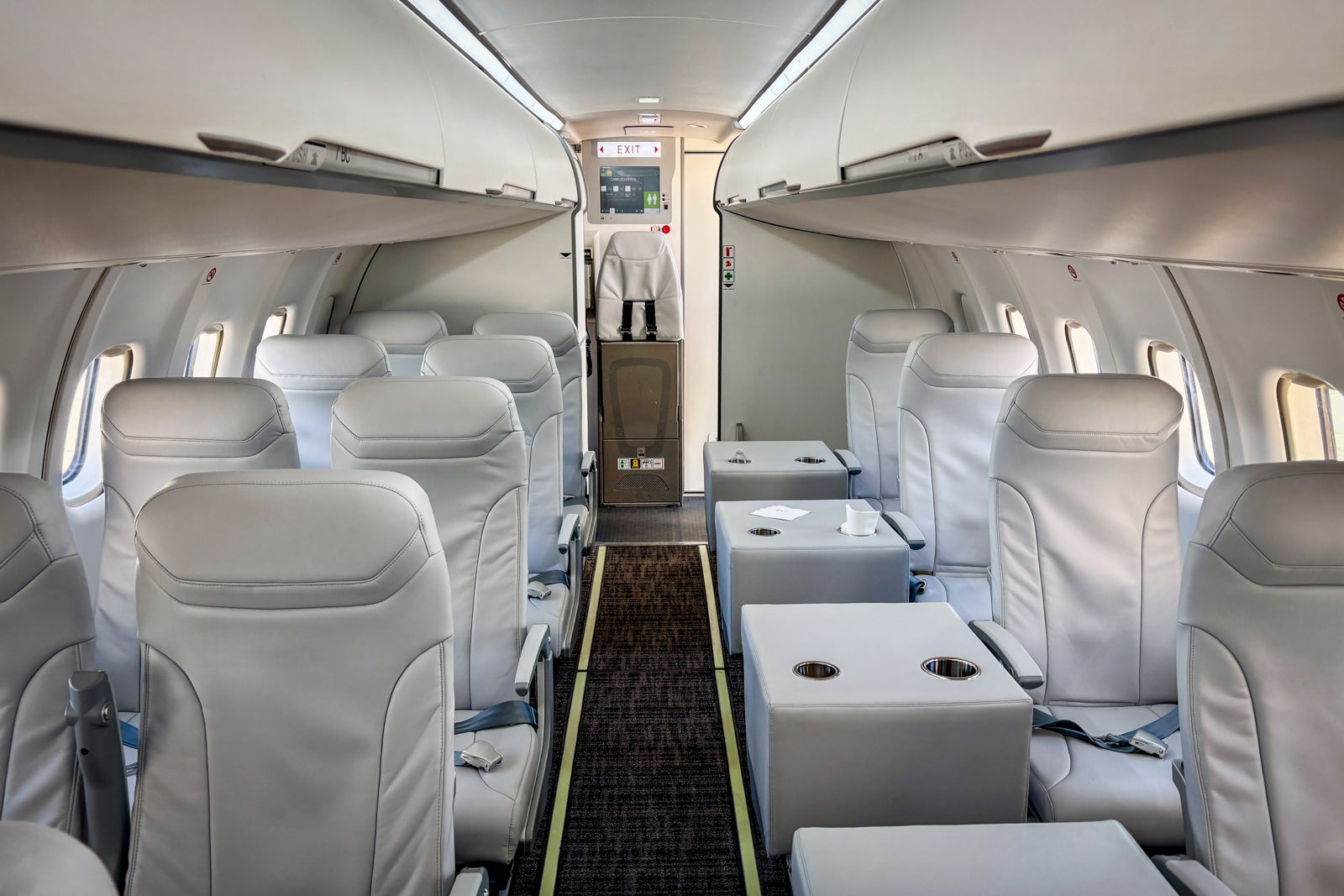
Even though the airline added an extra half-inch of padding to the JSX for premium service during aircraft modifications, the seats themselves are still stiff. The ATR aircraft were previously operated by Silver Airways, which closed in June.
Seat pitch is generous, especially for a regional jet, and there are USB-A and USB-C outlets at each seat. The ATR does not have a standard power outlet.
JSX plans to later remove the (small) overhead bins on the first two ATRs. (The second plane is due at the end of January.) The third and fourth planes, due in the summer, will have no overhead bins.
Currently, ATR does not offer Wi-Fi. An airline spokesperson said the Starlink high-speed inflight connectivity is scheduled to be installed in February.
Service on ATR is the same as on other JSX flights: passengers can enjoy a basket of snacks and a range of complimentary drinks, both alcoholic and non-alcoholic.
bottom line
JSX’s new turboprop aircraft are a compelling option for some short-haul JSX routes. Estimated flight time from SMO to LAS is 1 hour and 15 minutes. Its flight from SMO to Scottsdale Airport (SCF) will depart on January 22 with an estimated flight time of approximately 1 hour and 30 minutes. Since these flights are not long-haul, there is absolutely no need for deep seat recline or quiet rest.
Passengers flying on JSX can even earn United MileagePlus miles or JetBlue TrueBlue points. However, Wilcox said that so far, more and more customers are choosing to earn points through the airline’s own loyalty program, Club JSX.
And convenience. It takes about 60 seconds to get from curb to plane in SMO, not including the time you save by avoiding traffic jams on the west side of Los Angeles. The time saved is priceless.
Related reading:


