

What’s the background?
Much of the world’s food supply still relies on one key resource: land. This land is managed by a broad group of stewards – foresters, national park officials, environmental agencies, private landowners, and, most importantly, the people who produce our food: farmers and garden growers.
Currently, about 44% of the world’s habitable land is dedicated to producing food for humans, with even more land used to grow livestock feed. It’s a staggering amount of space that has been shaped and reshaped over thousands of years. However, as global pressures increase, the way we manage this land needs to evolve again if we want future generations to enjoy reliable, resilient food systems. Let us not forget that our land produces more than just food. It also provides important ecosystem services – clean air, high-quality water and opportunities to increase the resilience of communities around the world. So supporting the management of our food supply is important for a number of reasons.
How did we get here?
For much of modern history, and even today, in many rapidly developing countries, food production has been driven by one powerful priority: maximizing yields. More food means population growth, improved nutrition and prosperity, but this success also comes with costs that are often overlooked. The relentless pursuit of output does not always guarantee the long-term health of the land and ecosystems being farmed.
Now, as we face climate tipping points and environmental pressures, there is a clearer global understanding that food production must shift toward sustainability. This is consistent with a range of international commitments, from net zero targets to global methane commitments (30% reduction by 2030), as well as a number of regional, national and sector-specific climate frameworks.
-
 Aberystwyth University
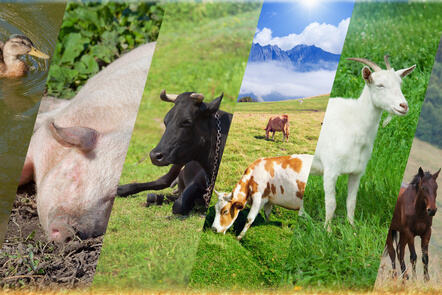
Animal Science 101: Exploring Animal Health, Welfare and Nutrition
Nature and Environment, Business and Management -
 Aberystwyth University
Rural entrepreneurship
Business and Management, Nature and Environment
What is the future?
In today’s agricultural landscape, terms like sustainable agriculture and regenerative agriculture have become central. Sustainability aims to meet today’s needs without compromising the future. Regeneration means going one step further: not just protecting natural systems but actively restoring and improving them.
To realize this vision, the role of farmers and growers must expand. Producing high-quality food is always crucial, but production alone is no longer enough. Modern land managers and their support networks need the skills to understand their carbon footprint, complete life cycle assessments, guide greenhouse gas reporting and explore new or more efficient production systems, and they must do this while maintaining animal welfare standards and running financially sustainable businesses.
-
 Aberystwyth University
Life Cycle Assessment (LCA): Sustainability Principles (LCA Part 1)
Business and Management, Nature and Environment -
 Aberystwyth University
Life Cycle Assessment: Interpretation and Assessment: (LCA Part 2)
Business and Management, Nature and Environment
New era and new skills
Agriculture has always been a vocational profession, based on practical expertise. However, today’s food systems require a new convergence of knowledge – agronomy, digital tools, environmental regulation, data analytics and business management, to name a few.
If farmers and growers don’t develop these new skills, they risk becoming increasingly reliant on consultants to stay compliant or competitive, and whether those consultants are subsidized or full-cost private experts, the result is the same—more and more farm profits are being quietly lost.
There is another side to this transformation. As regulations tighten and new practices emerge, the space for such skilled advisors is rapidly expanding. Agricultural consulting is a growing opportunity for those who keep their knowledge sharp and ahead of changing needs. This is not limited to those within the industry. There is a growing space for experts from outside traditional farming backgrounds; technologists, data analysts, coders, engineers and innovators of all kinds. Their skills, enhanced by an understanding of the agricultural context, can equally play a meaningful role in shaping the future of food production.
Currently, access to quality training at a reasonable cost, provided by organizations and individuals who understand the scope of knowledge needs and current gaps, is rather limited. At Aberystwyth University we have been working to develop and integrate our understanding of these skills and knowledge development areas through a range of courses for a range of professionals, including:
- Life Cycle Assessment (LCA): Sustainability Principles
- Life cycle assessment: interpretation and evaluation
- Greenhouse gas removal: land-based solutions
- The future of food: building a sustainable food supply system
- Rural entrepreneurship
- Livestock Science 101: Explore animal health, welfare and nutrition.
-
 Aberystwyth University
The future of food: building a sustainable food supply system
Business and Management, Nature and Environment -
 Aberystwyth University
Greenhouse gas removal: land-based solutions
Nature and Environment, Business and Management
Where should we go?
As pressures on our land and climate continue to increase, the direction for food and agriculture is clear: we must build systems that are resilient and adaptable. This means investing not only in new technologies and practices, but also in the people who manage our landscapes every day. Farmers, growers, foresters, educators, researchers, policymakers and consultants all have a role to play in shaping future food systems.
This transformation won’t be simple, but is it achievable? We believe that access to the right training opportunities can go a long way in helping the next generation of land managers, their supporting advisors and policymakers not only keep pace with change, but lead it. By doing so, they can help ensure a future in which productive agriculture and a healthy environment are no longer competing goals, but partners in a common long-term vision.
-
 Aberystwyth University
Food Innovation: The Future of Fermentation
Nature and Environment, Business and Management -
 Aberystwyth University
Life Cycle Assessment (LCA): Green Skills Development
Dr David Cutress is a Knowledge Exchange Manager and Researcher, IBERS Distance Learning Lecturer (Higher Education Association Fellow) and Green Digital Transformation Consultant.


