

Web objects in Adobe Captivate are a powerful way to bring your eLearning courses to life. They allow you to embed videos, web pages, HTML5 content, and PDFs directly into slides without taking learners out of the course. But like any tool, they have a learning curve. Many new users of Captivate encounter the same issues when using web objects, and these errors can lead to content corruption, poor user experience, and even security issues.
This article will guide you through the most common mistakes to avoid so that you can use Web objects with confidence from the beginning.
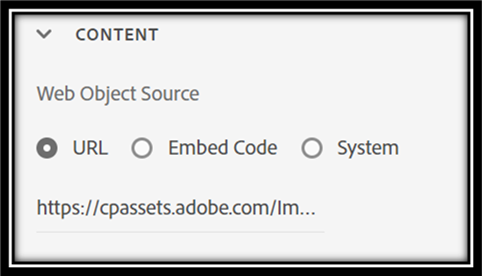
Mistake 1: Using HTTP instead of HTTPS for URLs
The first thing a new user has to do is paste the URL directly into the Web object without checking whether it starts with “http” or “https”. This may seem like a small detail, but it’s important.
The HTTP link is not secure. Modern web browsers often block or warn against loading unsafe content within other pages. If your web object uses HTTP links, and your course is hosted on an HTTPS server, the browser may refuse to display it at all.
How to do it:
- Always use HTTPS links when adding URLs to web objects.
- If the website you’re embedding on doesn’t support HTTPS, consider finding alternative sources or hosting the content yourself.
Mistake 2: Not editing the embed code to fill the content area
Videos can be easily added to your courses by embedding code from platforms like YouTube or Vimeo. But many beginners stick to the embed code and assume it will work perfectly without any adjustments.
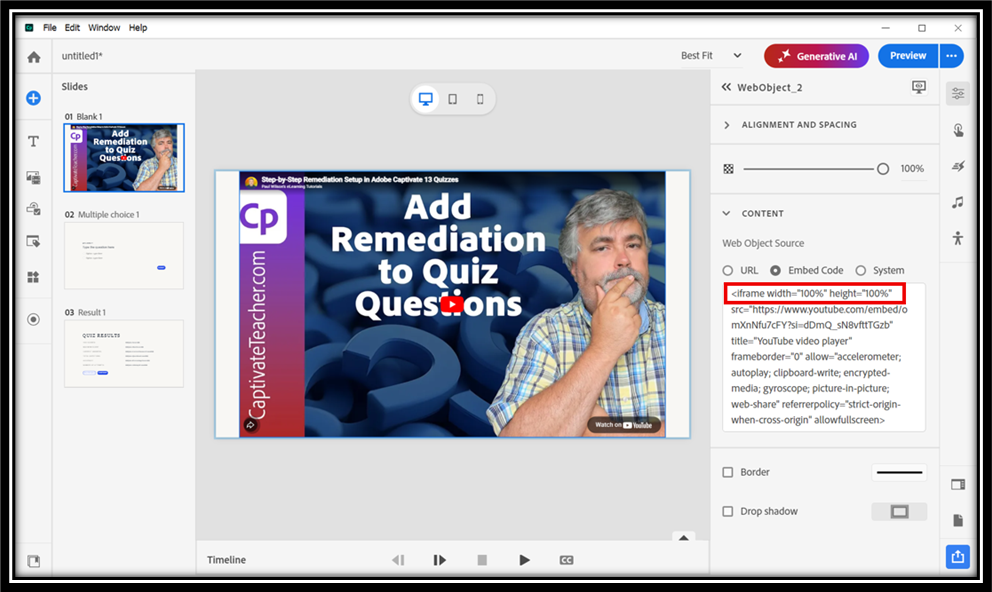
The problem is that embed codes usually have fixed width and height values, such as width=”560″ height=”315″. When these do not match the size of the web object’s content area in Captivate, the video may appear cropped, too small, or overflow the slide area.
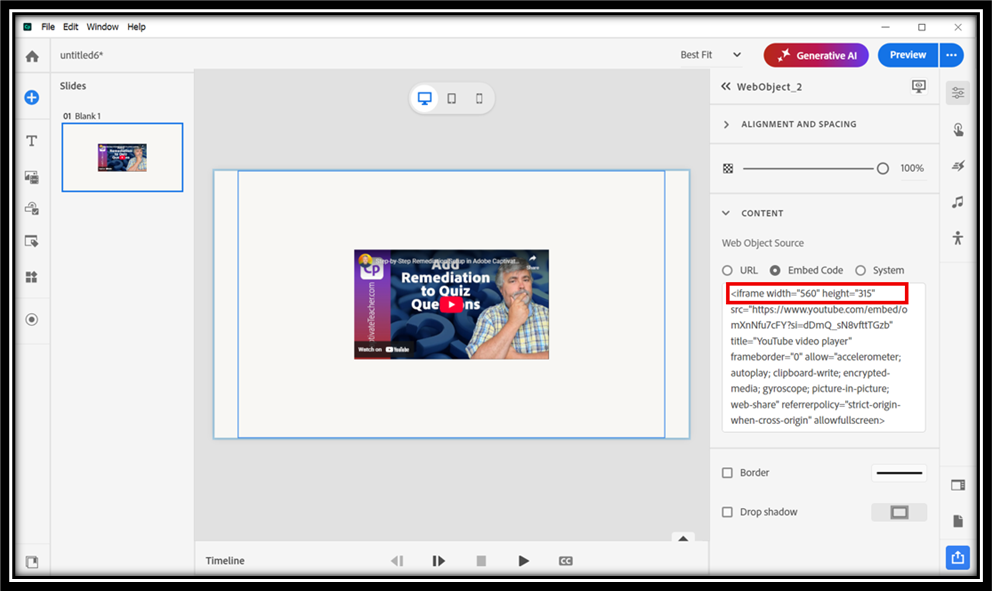
How to do it:
- After pasting the embed code, edit it to set the width and height to 100%. This ensures that the video correctly fills the entire content block.
- Before publishing, be sure to use the preview options in Captivate to check how your content will look on different device sizes.
Mistake 3: Testing in only one browser
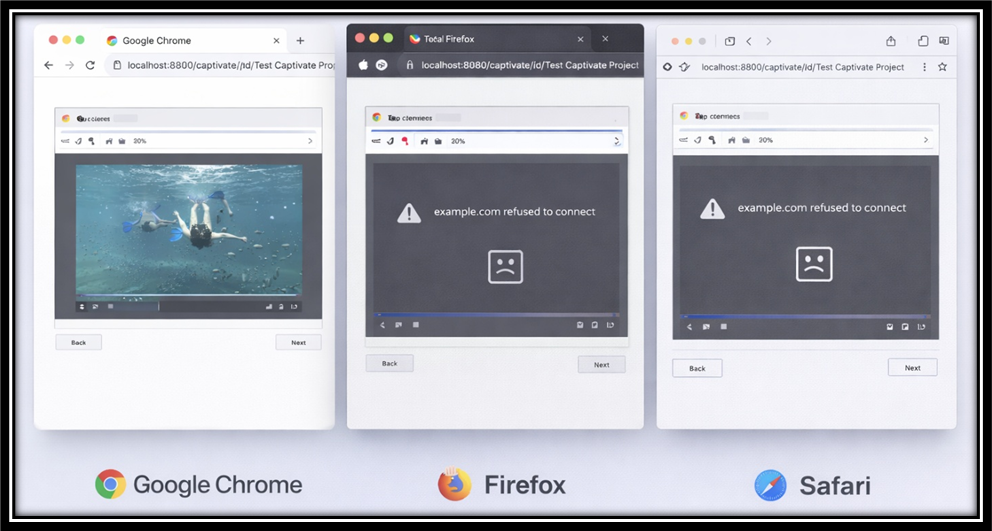
Web objects rely on the learner’s browser to display content. What works perfectly in Google Chrome may look terrible in Safari, Firefox, or Edge. New Captivate users often test their courses in just one browser and assume everything works, only to receive complaints from learners using different browsers.
How to do it:
- Test your web objects in multiple browsers (at least Chrome, Firefox, Safari, and Edge).
- If a browser cannot display your content, please indicate this in the course requirements or find an alternative method of providing the same information.
Mistake 4: Trying to embed a website that blocks embedding
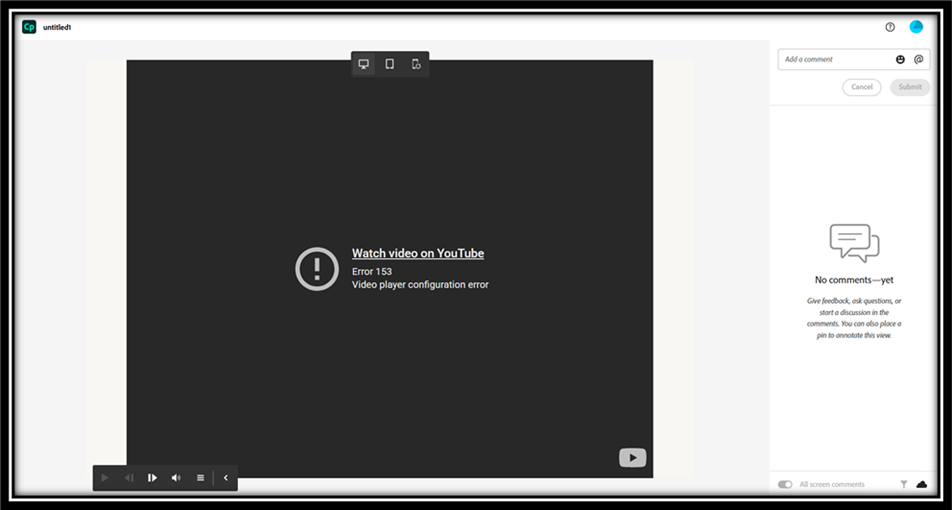
Not all websites can be embedded into another page. Many websites use security settings to specifically prevent their content from being loaded into iframes, which is the method used by Web objects. This is called clickjacking protection, and websites like Google, Facebook, and most banking or government websites use it intentionally.
When beginners try to embed such a website, the Web object area on the slide will appear blank or display errors. It’s also worth noting that Adobe Captivate does not support redirecting to a different website through web objects.
How to do it:
- Before adding any URL as a Web Object, preview it in Captivate to see if it loads. If not, the website may block embedding.
- As an alternative, use a screenshot image with a hyperlink to open the site in a new tab.
Mistake 5: Ignoring CORS restrictions
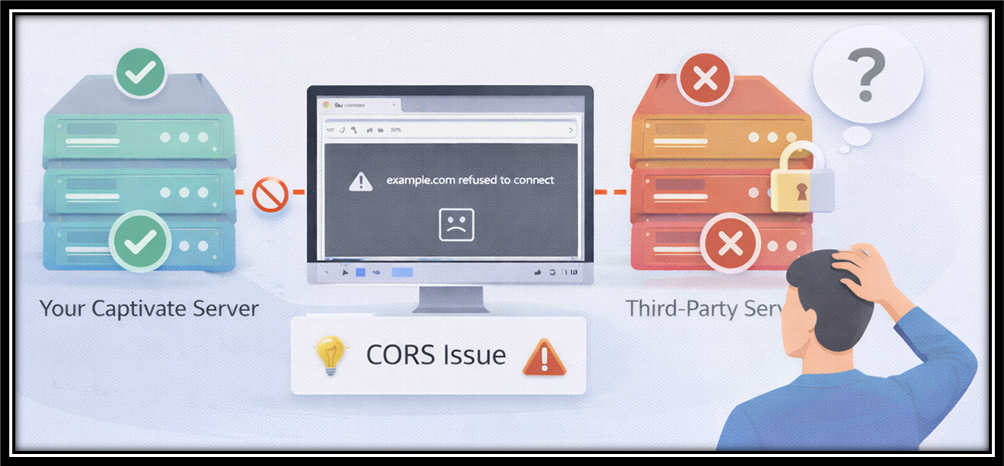
CORS stands for Cross-Origin Resource Sharing. In layman’s terms, it is a rule that controls whether a web page on one server allows content to be loaded from another server. If you try to embed external content without the correct CORS settings, the browser will block it and your web object will appear blank.
Many beginners spend a long time solving this problem without realizing that the problem lies with the content provider and not Captivate itself.
How to do it:
- When embedding external media, stick to trusted platforms like YouTube, Vimeo, or your organization’s own content server.
- If you are embedding content from a custom server, check with your IT team to ensure CORS is set up correctly.
Mistake 6: Skipping PDF feature check after publishing
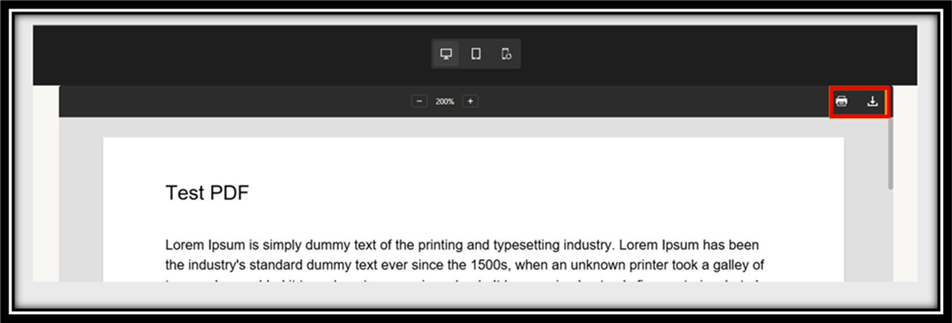
Adobe Captivate allows you to upload PDFs as Web Objects, which is ideal for containing reference materials or worksheets. However, many beginners forget to test the “Download” and “Print” buttons that appear next to the PDF web object.
When you publish a course, the PDF is copied to the project file. If there’s a problem during publishing, or if the learner’s device doesn’t fully support certain PDF features, these buttons may not work as expected.
How to do it:
- Use Captivate’s preview option to view PDF Web Objects as a learner.
- Manually click the “Download” and “Print” buttons during the preview to confirm that they are both working properly.
- Test on different devices, including tablets and phones, to make sure the PDF displays correctly on all screen sizes.
Mistake 7: Using unreliable or unlicensed content sources
It may be tempting to embed any video or web page that seems relevant to your course topic. But new users often overlook two important questions: Is embedding content legally allowed? Will the link still be valid after one year?
Embedding a YouTube video without checking its license, or linking to a web page that disappears after a few months, can break your path and potentially create legal issues depending on how the content is used.
How to do it:
- Always use content from trusted, legal sources and check whether embedding is allowed before adding.
- Check embedded links regularly to ensure they are still valid and accessible in the learner’s location.
- If possible, host content on a platform controlled by your organization so that you have complete ownership and reliability.
Mistake 8: Not tested on mobile and tablet devices
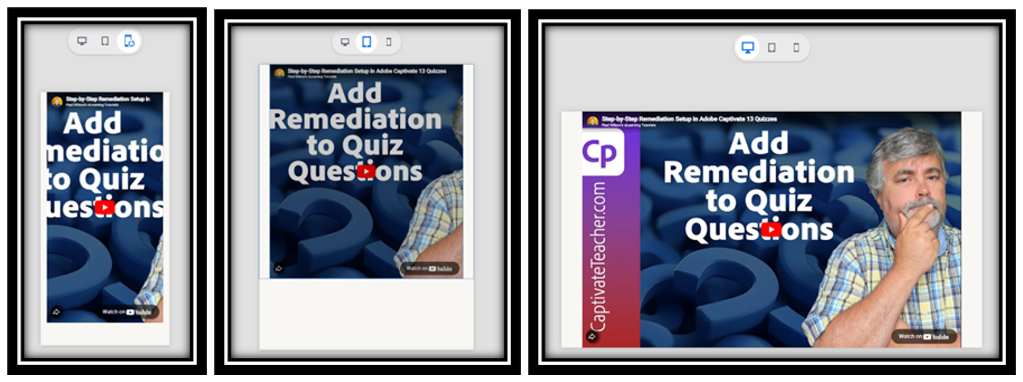
Many learners access e-learning courses via mobile phones and tablets. But beginners usually only design and test on a desktop computer. Web objects that look great on a large screen may become difficult to interact with on a small touch screen.
Videos that play well on a laptop may be too small to watch on a phone. Web pages embedded as web objects may require frustrating zooming and scrolling on mobile devices.
How to do it:
- Use Captivate’s built-in device preview feature to examine how web objects appear on different screen sizes.
- Make sure your embed content is responsive by setting the embed code width and height to 100%, which helps it adjust correctly to any screen size.
Error 9: No scheduled script blocking
Some learners access courses through the corporate network or from devices with script blocking enabled. This means that JavaScript-based content, including many interactive web objects, will not load for these users.
Beginners are often unaware of this possibility until they start receiving complaints from learners in certain organizations or areas where these restrictions are prevalent.
How to do it:
- Test your course by turning on script blocking in your browser to see how your learners experience it.
- Work with your team to provide fallback content, such as text descriptions or downloadable files, for learners whose devices cannot load the web object.
Mistake 10: Slideshow contains too much external content
Adobe Captivate allows up to two web objects per slide. New users sometimes try to pack too much external content onto a single slide, which can slow down download times, overwhelm learners, and create a confusing layout.
Even though two objects are technically allowed, placing them on one slide without careful consideration of layout and spacing can make the experience feel confusing and unprofessional.
How to do it:
- Keep your slides focused. One Web object per slide is usually a cleaner, more learner-friendly option.
- Carefully use captions, subtitles, and buttons to guide learners and provide context about Web objects.
- Customize the appearance of content blocks, including background color, borders, and spacing, to make web objects feel like natural parts of the slideshow.
final thoughts
Web objects are one of the most exciting features in Adobe Captivate. They allow you to bring in rich, interactive, up-to-date content from the web without learners ever leaving your course. But getting them right requires some planning and testing.
To summarize: always use HTTPS links, edit your embed code to populate content areas, test across multiple browsers and devices, and make sure the content you’re using is legal and reliable. Plan for edge cases such as script blocking and CORS limitations, and keep your slides concise and focused.
By avoiding these common mistakes, you’ll save yourself a lot of troubleshooting time, and more importantly, you’ll provide your learners with a smooth, professional experience that keeps them engaged in your courses.


